

Meditation Instruction
Develop a meditation practice that fits your life.
One-on-one guidance for beginners and experienced practitioners seeking greater clarity, presence, and freedom.

What I Can Help With
Starting a meditation practice
Learn the fundamentals and find an approach that feels accessible, meaningful, and appropriate for your life.Developing consistency
Build a sustainable practice and receive guidance as questions, challenges, and new experiences arise.Strengthening concentration
Develop greater stability of attention and the ability to remain present without constantly being pulled away.Working skillfully with stress and reactivity
Learn to recognize activation, settle more effectively, and create more space between what happens and how you respond.Cultivating self-awareness
Become more familiar with your thoughts, feelings, bodily experience, habits, and underlying patterns.Understanding difficult emotions
Explore how emotions arise, what sustains them, and how to relate to them with greater clarity and compassion.Bringing mindfulness into everyday life
Carry the benefits of practice into your relationships, work, decisions, creativity, and ordinary daily experience.

What Do Sessions Look Like?
Sessions are conversational, practical, and tailored to your experience. You do not need to know how to meditate, sit perfectly still, or quiet your mind before beginning. Learning how to work with restlessness, distraction, uncertainty, and discomfort is part of the practice.
Each session may include:
Guided meditation
Discussion, reflection, and questions
Personalized instruction based on your experience
Practices to explore between sessions
Ongoing refinement as your practice develops
Rather than forcing you into a single method, we will work together to find practices that are appropriate for where you are and what you are experiencing.
My Approach
My approach combines traditional contemplative practice with a practical, integrated understanding of modern life.
Meditation can help us become more aware of what is happening within and around us. But awareness is only part of the work. Practice can also help us understand and integrate difficult patterns, continue growing emotionally and psychologically, and bring greater clarity, wisdom, and care into the way we live.
The goal is not to retreat from life, but to meet it more fully—with greater freedom, discernment, and capacity to respond.

Frequently Asked Questions
-
Not at all. Many people begin private instruction with little or no meditation experience. Sessions are designed to meet you where you are and help you develop a practice gradually.
-
You do not need to sit perfectly still or stop thinking in order to meditate (in fact that’s not even really the goal at all). Restlessness, distraction, and a busy mind are all normal parts of the process. Learning how to notice and work with them is part of the practice!
-
No. You do not need any special clothing, equipment, or meditation cushion. You can practice comfortably in an ordinary chair.
People who begin sitting for longer periods may eventually find a cushion or bench helpful, but none of that is necessary to begin.
-
My teaching draws from a wide range of contemplative and psychological traditions, including early Buddhist and Theravāda teachings, Mahāyāna and Vajrayāna Buddhism, Zen, nondual teachings, Integral Theory, and modern psychology.
Rather than asking every student to follow one particular tradition or technique, I draw from these sources to offer practices suited to the individual. Depending on your experience and needs, we may explore the breath and body, concentration, open awareness, emotions, habitual patterns, inquiry, compassion, or the relationship between meditation and everyday life.
-
No. There is no belief required, and I will never ask you to believe anything.
The instructions I offer are invitations, exercises, and opportunities for inquiry. You will be encouraged to investigate your own experience and discover what is true and useful for yourself.
-
No. Meditation instruction and psychotherapy can support one another, but they work in different ways.
Meditation primarily helps us become more aware of our immediate experience—our thoughts, emotions, bodily sensations, habits, and the ways we construct our sense of self. Therapy, particularly Western talk therapy, can be especially valuable for exploring personal history, relationships, psychological patterns, and material that may be difficult to recognize or access on our own.
There is overlap between the two, but neither replaces the other. Meditation can deepen the awareness you bring into therapy, while therapy can help you understand and integrate what meditation reveals.
-
Private instruction may be helpful if you are new to meditation, struggling to establish a consistent practice, unsure whether you are practicing effectively, or interested in exploring your experience more deeply with personalized guidance.
The free consultation gives us a chance to discuss what you are looking for, answer your questions, and determine whether working together feels like a good fit. There is no obligation to continue.


About Me
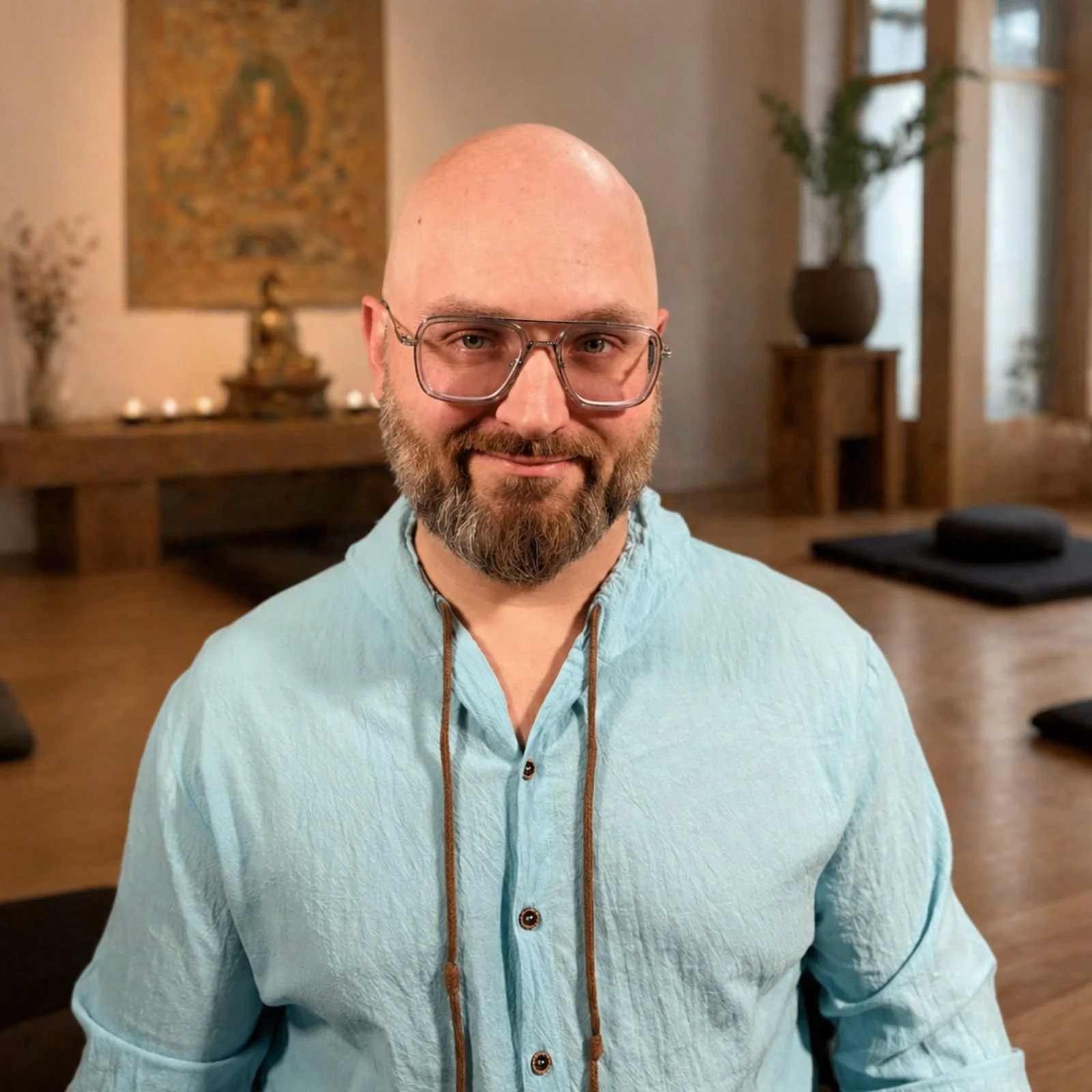
I’m Thor Bremer, a meditation teacher, composer, musician, and educator based in the Chicagoland area.
My approach to meditation is grounded in more than 20 years of personal practice, two years of formal teacher training, and a deep desire to understand the human condition. My own practice draws from Buddhism, nonduality, Integral Theory, modern psychology, philosophy, and more.
As a teacher, I’m especially interested in making ideas that can seem abstract or obtuse accessible, practical, grounded, and embodied. I teach through live sessions, courses, and private instruction, offering practices, questions, and frameworks that help people investigate their own experience and their lives with greater clarity and honesty.
My aspiration here is simply to help people wake up, clean up, grow up, and show up.

Offerings
-
A brief conversation to discuss what you’re looking for and whether working together feels like a good fit.
-
One 60-minute private meditation session.
-
Four private sessions offering structured support as you establish or deepen your practice.



Four private sessions offering structured support as you establish or deepen your practice.